

Grand casino crash games
Introduction
I look at crash games very differently from how I assess slots, best roulette page at Grand Casino or live tables. With this format, the key question is not simply whether a casino has a few titles hidden in the lobby. What matters is how visible the category is, how quickly I can access it, whether the round flow feels smooth, and whether the platform makes this high-speed style of play easy to understand. In the case of Grand casino, that practical angle is especially important.
Crash games are a niche compared with slots, but they have built a loyal audience because they offer something most casino categories do not: short rounds, direct control over exit timing, and a stronger sense of tension per second of play. For a player in the United Kingdom, that can make the section feel fresh and engaging, but only if the site presents it properly and supports the format with enough quality titles.
On this page, I focus strictly on Grand casino Crash games: whether the brand has a meaningful crash offering, how the format usually works on the platform, what makes it different from other categories, and what a player should realistically expect before launching a round.
What crash games mean at Grand casino
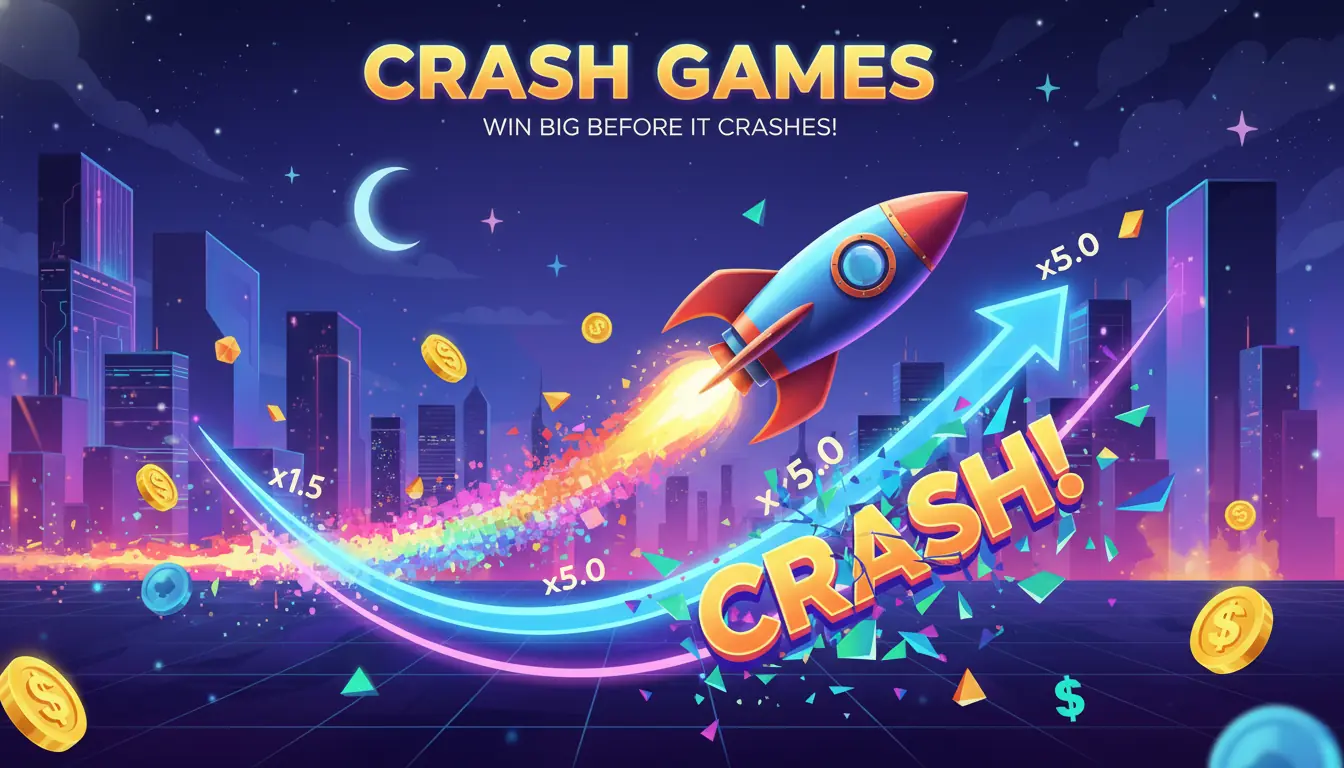
At Grand casino, crash games should be understood as a fast-cycle category built around one core decision: when to cash out. Instead of spinning reels and waiting for symbol combinations, the player watches a multiplier rise from a low starting point. The round can end abruptly at any moment. If the player cashes out before the crash point, the return is based on the multiplier reached. If not, the stake is lost.
That sounds simple, and mechanically it is. But the actual experience is very different from traditional casino play. In slots, the result is effectively locked in once the spin starts. In crash titles, the player is involved during the round. Even when auto cash-out is available, the feeling is still more active and more immediate than pressing spin on a slot machine.
For Grand casino, the value of such a category depends on three practical factors:
- whether crash games are grouped clearly enough to find without digging through a broad games lobby;
- whether the title selection includes recognised crash-style products rather than just one or two edge cases;
- whether the interface handles fast repeated rounds smoothly on desktop and mobile.
If those pieces are in place, crash games can become a useful alternative category. If not, they remain a side feature rather than a real reason to choose the platform.
Does Grand casino have a crash games section and how developed is it?
From a player’s perspective, this is the first real test. Many online casinos mention crash-style titles somewhere in the catalogue, but not all of them treat the format as a proper section. Grand casino may present crash games either as a dedicated category or as part of a broader instant games, arcade, or speciality games area. That distinction matters more than it seems.
If crash titles sit inside a mixed section with mines, Grand Casino Plinko game guide for players comparing casino options, keno and other quick-play products, the category is still usable, but the experience is weaker. I generally see this as a sign that crash is available but not central to the platform’s identity. If Grand casino instead gives crash games their own visible filter or menu entry, that suggests a more deliberate effort to serve players who specifically want this format.
In practical terms, Grand casino’s crash offering is best judged not by marketing labels but by usability:
| What to check | Why it matters |
|---|---|
| Dedicated crash category or filter | Makes the section easier to browse and shows the format is taken seriously |
| More than one provider or style | Prevents the category from feeling shallow or repetitive |
| Clear game tiles and loading speed | Important because crash sessions often involve many short rounds in a row |
| Mobile responsiveness | Crash games are often played on phones, where timing and interface clarity matter |
My honest view is that at many general online casinos, crash games are still a secondary feature rather than a flagship vertical. Grand casino should therefore be judged with restraint. If the site offers a clearly accessible crash segment with a respectable range of titles, that is already a positive result. But if the selection is very thin or hidden inside a broad games catalogue, players should treat it as a supplementary option rather than a standout strength.
How crash games at Grand casino differ from slots, live casino and table games
This is where many players make the wrong assumption. They see crash games listed among other casino products and expect a similar rhythm. In reality, the format creates a different kind of session.
Compared with slots, crash games are less passive. A slot spin is mostly about volatility, paytable structure and bonus features. A crash round is about timing pressure. The emotional pattern is sharper: enter, watch the multiplier rise, decide whether to exit, repeat. There is less visual spectacle, but often more immediate tension.
Compared with roulette or blackjack, crash games are less strategic in the classical sense. You are not choosing table positions, studying dealer rules or managing side bets. The decision space is narrower. That can make the format easier to learn, but it also means the excitement comes from pace and risk timing rather than from layered rules.
Compared with Grand Casino live casino games guide with key terms and account details, crash games feel more private and less ceremonial. There is no dealer presentation, no table atmosphere and usually no prolonged waiting between actions. For some players, that is a major advantage. For others, it makes the experience feel more mechanical.
Compared with poker guide, the difference is even stronger. Poker rewards long-form decision making, player reading and patience. Crash games reward quick reactions, preset discipline and comfort with repeated short cycles.
I would summarise the contrast like this:
| Category | Main player experience | How crash games differ |
|---|---|---|
| Slots | Passive spin-based play with feature rounds | More active timing and faster emotional swings |
| Roulette / Blackjack | Classic table structure and defined betting stages | Shorter rounds and simpler decision flow |
| Live casino | Human-led presentation and table atmosphere | Less social, more immediate, more repetitive |
| Poker | Skill-heavy, slower, opponent-based play | Minimal strategic depth but much quicker pacing |
So when a player opens Grand casino Crash games, the question should not be “Is this better than slots?” It should be “Do I want a more compressed, timing-driven format right now?”
Which crash games may be worth attention
The exact game list can change over time, but players usually gravitate toward crash titles that do one of two things well: either they keep the core mechanic extremely clean, or they add just enough visual identity to make sessions feel less repetitive. At Grand casino, the most interesting crash games are likely to be the ones that balance speed with readability.
In this category, I usually advise players to value function over decoration. A good crash title should show the multiplier clearly, process cash-out commands without confusion, and avoid cluttered animations that distract from the one decision that matters. Fancy design is welcome, but only if it does not interfere with timing.
Titles may vary in theme, auto-play tools, auto cash-out options and side interface elements, but the practical differences often come down to:
- how quickly one round transitions into the next;
- how clear the multiplier curve is on smaller screens;
- whether manual and automatic cash-out options are easy to configure;
- whether the game encourages disciplined play rather than impulsive chasing.
If Grand casino offers several crash-style titles instead of one token entry, players can choose based on comfort rather than novelty alone. That is important because crash sessions become repetitive fast when the section lacks variety.
How to start playing crash games at Grand casino
Starting is usually straightforward, but I think players benefit from approaching the category with a slightly different mindset than they would use for slots. The basic process is simple: open the crash section or relevant filter, select a game, choose a stake, and decide whether to use manual cash-out or set an automatic target multiplier.
What matters is not the technical start, but the first ten minutes. That is where many players misunderstand the format. They often assume that because the rules are simple, there is nothing to prepare for. In fact, crash games punish impatience more than many other casino products.
Before playing for real money at Grand casino, I recommend this order:
- Check whether the game offers a demo mode or at least a visible rules panel.
- Confirm how manual and auto cash-out work.
- Start with a low stake and watch several rounds before increasing it.
- Decide in advance whether you are playing for short bursts or a longer session.
This preparation sounds basic, but it directly affects the experience. Crash games move quickly, and players who enter without a plan often end up reacting emotionally to two or three early rounds.
What players should check before launching a crash game
There are several practical details that matter more here than in slower casino categories. At Grand casino, I would check the following before committing to a session.
First, interface clarity. If the multiplier display, stake controls or cash-out button feel cramped, especially on mobile, that is a warning sign. Crash games rely on immediate readability.
Second, round speed. Some players love rapid-fire cycles. Others find them mentally tiring. A title that looks exciting for three rounds can become stressful over thirty.
Third, auto cash-out settings. This is one of the most important practical tools in the category. It helps turn a reactive game into a more controlled one. If the feature is awkward or buried in the interface, the user experience drops.
Fourth, stake discipline. Crash games can create the illusion that losses are easy to recover because rounds are so short. That is exactly why pre-set limits matter.
Bonus terms deserve the same scrutiny as the game’s own mechanics, because a crash title’s contribution to wagering can differ sharply from that of a slot. Operators frequently apply category exclusions or reduced game weighting to this format, and players who assume otherwise may find their bonus balance locked or their playthrough progress stalled. The practical habit is to read the bonus terms before the first round begins, checking whether crash games are included at all and, if so, at what percentage and under which multipliers. That single check typically separates a straightforward cashout from a forfeited bonus, and it is the one step most likely to protect a player’s real money.
Tempo, round mechanics and overall user experience
The strongest argument for crash games is tempo. The weakest argument is also tempo. Everything depends on the player.
At Grand casino, a good crash experience should feel immediate without becoming chaotic. The ideal rhythm is one where rounds load quickly, the multiplier animation is smooth, and the player can move from one attempt to the next without friction. If the site performs well, the format feels clean and focused. If not, every delay is more noticeable than it would be in slots or live casino.
Mechanically, crash games are repetitive by design. That is not a flaw; it is part of the appeal. The repetition creates tension because the same simple decision keeps returning under slightly different emotional conditions. After a low crash, players may feel tempted to hold longer. After missing a big multiplier, they may become overly cautious or overly aggressive. The category constantly tests discipline.
This makes the user experience highly personal:
- some players find the short rounds energising and efficient;
- some enjoy the sense of control created by choosing when to exit;
- others find the repetition draining after a relatively short session;
- players who prefer richer themes or bonus features may see crash as too bare.
In other words, Grand casino Crash games can feel more intense than many traditional categories even when the rules are simpler.
Are Grand casino crash games suitable for beginners and experienced players?
Yes, but for different reasons, and not equally well in every case.
For beginners, crash games are easy to understand on paper. There are fewer moving parts than in blackjack, poker or many advanced slot mechanics. A new player can grasp the core idea within minutes. That makes the category accessible. However, simplicity should not be confused with softness. The pace can pressure inexperienced users into poor decisions very quickly.
For experienced players, the attraction is usually not complexity but control and rhythm. Many seasoned casino users appreciate having a format that strips away long animations and gets straight to the result. They may also prefer the ability to use fixed auto cash-out targets as part of a disciplined session structure.
I would break suitability down like this:
- Good for beginners who want simple rules and short sessions, provided they use low stakes.
- Good for experienced players who value pace, clean mechanics and repeatable decision patterns.
- Less suitable for players who chase entertainment through story, features, symbols or live interaction.
- Risky for impulsive users who struggle with stop-loss limits or emotional reaction play.
So the category is accessible, but not universally comfortable. That distinction matters.
Strong points of the crash games section
If Grand casino presents the category properly, the strongest points are fairly clear.
First, crash games offer a real change of pace from the rest of the casino floor. They do not feel like another slot reskin or a slightly altered table game. For players who want something faster and more hands-on, that difference has practical value.
Second, the format is easy to learn. A player does not need to study a complex paytable or multiple rule variations to get started.
Third, sessions can be very flexible. Crash games work for short bursts of play better than many live tables or feature-heavy slots.
Fourth, if Grand casino supports mobile play well, this category naturally benefits from it. Crash games are among the few casino formats that often feel just as natural on a phone as on desktop, provided the controls are responsive.
Finally, the category can appeal to players who like a stronger feeling of agency. Even though the underlying outcome is still game-driven, choosing when to cash out changes how the session feels.
Weak points and questionable areas
This is the part many promotional pages avoid, but it matters. Crash games have clear limitations, and Grand casino should be judged honestly on them.
The first weakness is depth. Even when the section is competently built, crash games are mechanically narrow. If Grand casino only offers a small handful of titles, the category may lose freshness quickly.
The second issue is emotional volatility. Because rounds are so short, a player can make many decisions in a small amount of time. That can create a stronger sense of momentum, frustration or urgency than slower categories.
The third issue is presentation. If the site does not label crash games clearly, players may not even realise the section exists. In many casinos, this category is still underdeveloped in navigation terms.
The fourth issue is fit. Not every player enjoys this style. Someone who prefers immersive slot features, table rituals or live interaction may find crash games too stripped down to hold attention.
And finally, there is the risk of overestimating control. The cash-out decision feels active, which is part of the appeal, but players should not mistake that feeling for a strategic edge in the way they might think about poker or advantage-based table decisions.
Practical advice before choosing crash games at Grand casino
If I were advising a player specifically about Grand casino Crash games, I would keep the guidance simple and practical.
- Do not judge the section by one round or one lucky multiplier. Evaluate the interface and rhythm over a short test session.
- Use auto cash-out if you know you are prone to hesitating too long.
- Keep stakes lower than you would in slower categories until you understand your own reaction to the pace.
- Treat crash games as a distinct format, not as a substitute for slots or roulette with slightly different graphics.
- If the selection feels thin, accept that the category may be a side option at Grand casino rather than a destination feature.
That last point is especially important. A player gets the most value from crash games when expectations are realistic. If you want fast, repeatable rounds and a direct cash-out mechanic, the section may be worth your time. If you want depth, atmosphere or broad strategic variety, other categories will probably serve you better.
Final assessment
My overall assessment is that Grand casino Crash games can be genuinely worthwhile, but only for the right type of player and only if the platform presents the category clearly enough to use without friction. The format itself is strong when executed well: fast rounds, simple rules, immediate tension and a more active feel than slots. Those are real strengths, not marketing claims.
At the same time, I would not overstate the role of crash games on a general casino platform. Unless Grand casino gives the category a visible section, decent title variety and smooth mobile performance, it is more likely to function as a useful secondary area than as a defining feature of the brand.
For beginners, the attraction is accessibility, but they need discipline because the pace can be deceptive. For experienced players, the appeal lies in speed and control, though the category may still feel limited over longer sessions. In short, Grand casino’s crash games are worth attention if you specifically enjoy timing-based, high-tempo play. They are much less compelling if you are looking for rich features, social interaction or deep strategic structure.
That is the right way to frame the section: not as something that automatically suits everyone, but as a focused format with clear strengths, clear limits and very specific practical value.
FAQ
What is a crash game and how does the round end?
A crash game runs fast in real time while a multiplier increases. The round ends when the multiplier crashes, and winnings are paid based on the auto cash-out point.
How does auto cash-out work if the multiplier keeps rising?
Auto cash-out triggers automatically at the multiplier level set before launch. That helps lock in a result without watching the number the whole time, which is useful for quick crash rounds.
How can the game lobby show whether a working mirror or backup is available?
Grand may present an alternative launch link if a working mirror is required for stable access. If one session fails to load, the lobby can offer a backup route so gameplay can continue.